Digital twins for embedded systems
Digital twins for embedded systems raise your product development to a new level: Test processes are optimized, development cycles are accelerated and resources are used efficiently – without the need for physical prototypes. We support you in the introduction and improvement of virtualization strategies, from consulting to individual planning, vECU implementation and training for efficient development processes.

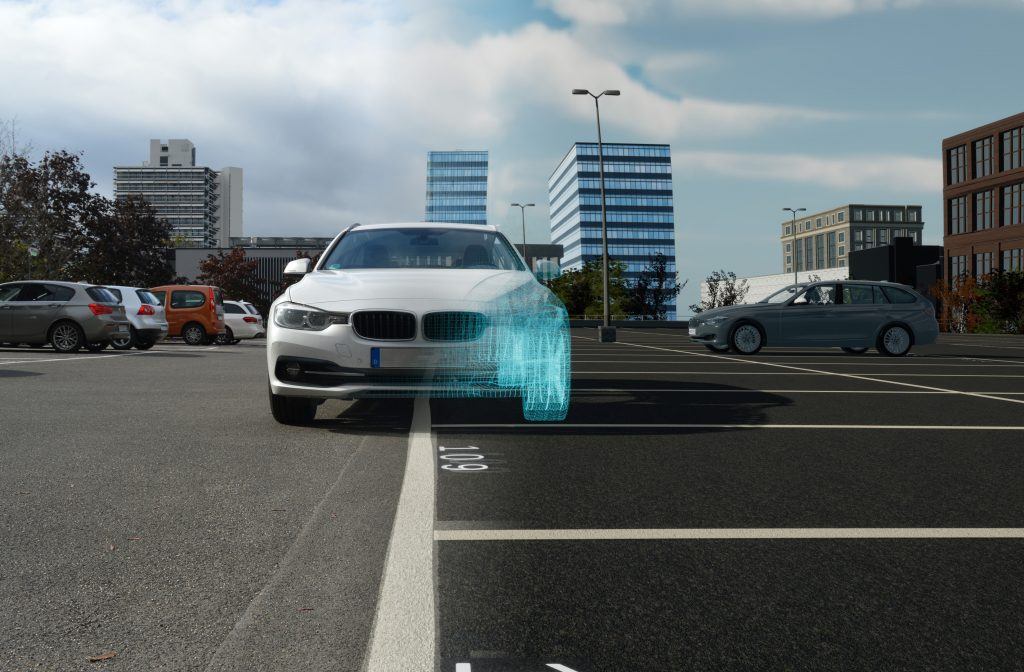
A digital twin for embedded systems is a virtual model of an electronic control unit (ECU) in a software environment. This digital copy makes it possible to conduct more extensive tests and validations without physical prototypes, which significantly accelerates development cycles.
Continuous software development driven by continuous integration, testing and development requires rapid feedback loops and automated processes. Hardware-based development methods often come up against their limits. Complex interactions and large numbers of variants drive up the expense of testing and validation.
Digital twins for embedded systems offer a forward-looking solution. Virtualization technologies such as software-in-the-loop (SiL) allow ECUs and their periphery to be comprehensively simulated, covering multiple use cases on a virtual basis.
The challenge: Managing growing complexity
The development of embedded systems, particularly in the automotive industry, presents a number of tough challenges. The increasing complexity of modern hardware-software products is raising the requirements for the integration and validation of systems. While conventional testing methods such as hardware-in-the-loop (HiL) offer established solutions, they are often associated with high costs and limited scalability. At the same time, new approaches such as continuous integration, testing and deployment require shorter development cycles, faster feedback loops and increased automation.

The large number of hardware variants that need to be taken into account during development represent another obstacle. This requires precise simulation environments in order to reliably test the behavior and interaction of these variants. It is also essential to determine the appropriate depth of virtualization. The flexibility of modern virtualization technologies opens up a broad range of solutions, but this variety can make it more difficult to choose the ideal degree of abstraction for specific use cases.
Overcoming these challenges requires a clear understanding of project goals and a strategic approach that runs from a precise definition of the testing strategy through to the integration of agile methods. This is the only way to fully exploit the potential of modern virtualization technologies and significantly improve the efficiency of development activities.
The solution: Implementing virtualization strategies
We offer comprehensive support with the introduction and optimization of virtualization strategies, including advice, the tailored planning and implementation of vECUs, and training for efficient development processes.
Our digital twin services for embedded systems
Virtualization advice

Virtualization & software-in-the-loop (SiL) training
Creating virtual ECUs (vECUs)

Digital twins for embedded systems: efficient, flexible and future-proof
The virtualization of embedded systems offers a clear competitive advantage. It eliminates the need for costly hardware prototypes, reduces development costs, and facilitates early integration and troubleshooting.
With our many years of experience and state-of-the-art methods, we will support you from analysis through to the implementation of virtual environments. Our customized solutions reduce dependencies on hardware, accelerate development cycles and improve the quality of your products.




Contact
Tobias Domke
Digital Twin
Unsolved challenges?
Get in touch with us. Your personal contact is:

Tobias Domke
Digital Twin
* Mandatory fields